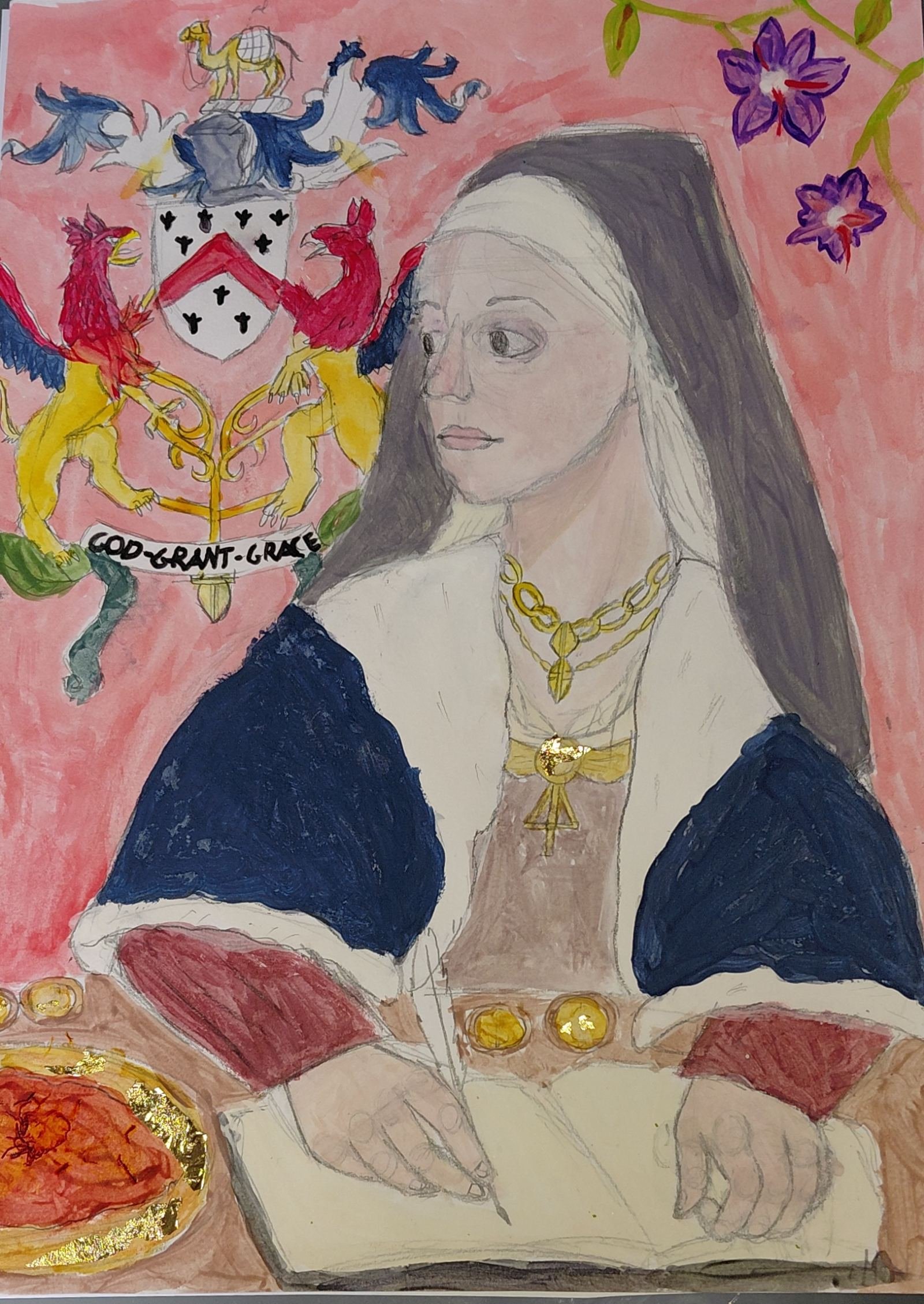
Portrait of Annabell Furner — Mia, Year 5, St Mary's RC Primary School
A More Curricular CIC Heritage Exhibition
Student artwork exploring the untold story of a grocer's widow in medieval London — her trade, her resilience, and her world.
Portrait of Annabell Furner — Mia, Year 5, St Mary's RC Primary School
About the Exhibition
In the records of medieval London, between the lines of guild ledgers and court rolls, lives a woman history almost forgot. Annabell Furner, a grocer's widow, navigated the complex world of medieval trade — a world where a woman's place was anything but simple.
Students from Mossbourne Community Academy and St Mary's RC Primary School, Battersea were invited to respond to Annabell's story through art. Working with primary historical sources, they imagined her world — the spices she traded, the streets she walked, and the life she built after her husband's death.
Annabell Furner was the widow of a London grocer who became a member of the Worshipful Company of Grocers in the 1430s — making her one of the earliest recorded female grocer in the Company's records.
Her story was pieced together by Yvette Reinfor, Founder of More Curricular CIC, who connected two separate archives: the Grocers' Company Black Book, researched by Dr Helen Clifford, Company Historian, and the Borromei Bank ledgers — the records of an Italian bank operating in medieval London — digitised by the late Professor Jim Bolton and Professor Francesco Guidi-Bruscoli through the Borromei Bank Research Project at Queen Mary University of London. By linking these sources, Reinfor revealed a woman who traded in saffron and cotton, was fined for Company obligations, and operated within international networks stretching from London to the Mediterranean.
History is not only made by kings and conquerors. The stories of ordinary people — particularly women — are often hidden in plain sight within historical records, waiting to be discovered and told.
This project invites young people to become historians themselves: to look at primary sources, ask questions, and bring forgotten voices back into the conversation.
The Evidence
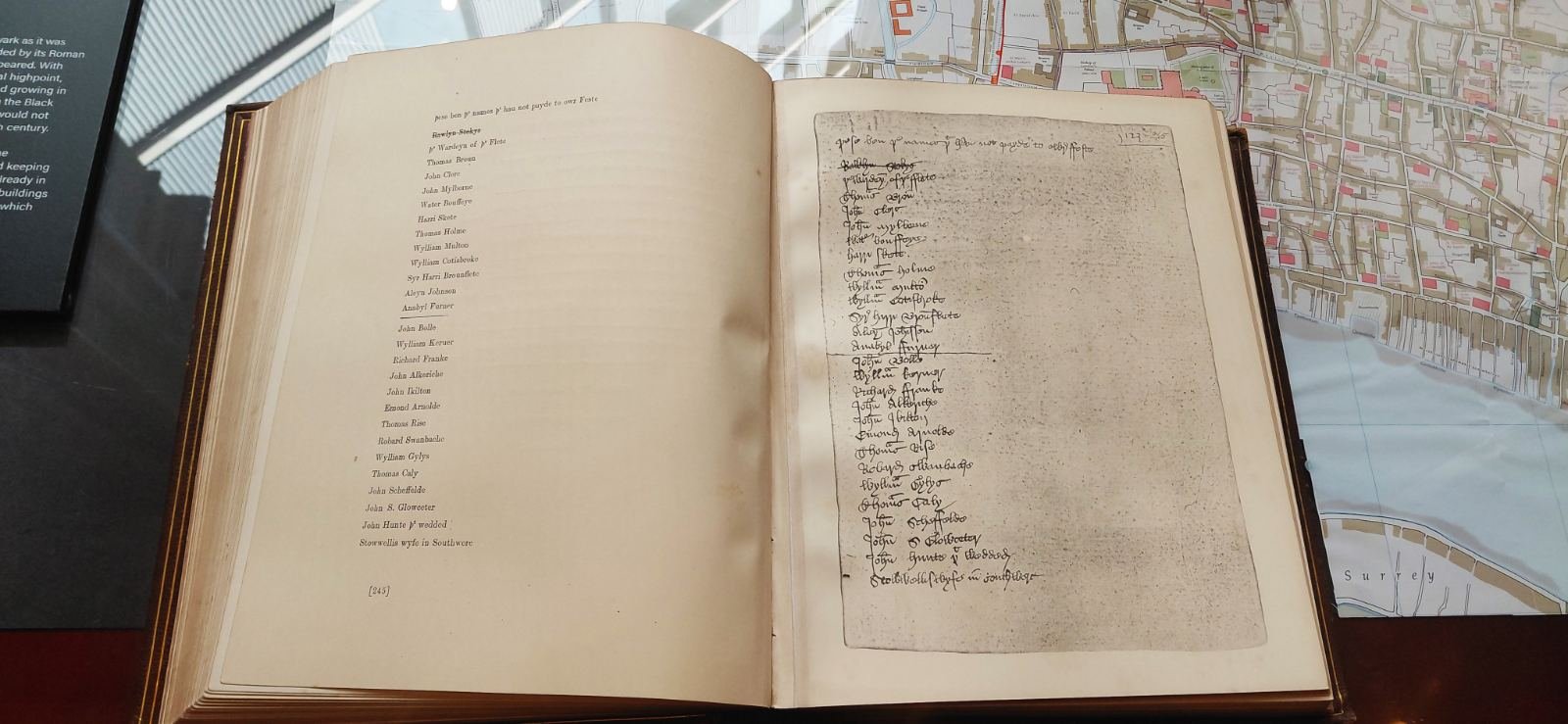
Annabell's story survives in fragments across two archives — the Grocers' Company Black Book and the Borromei Bank ledgers. Here is what they reveal.
"Rec'd of forfeits John Furner 40d" — the first mention of the Furner name. John appears on over twenty pages through to 1433. He was clothed in the Livery, paid for pepper, was fined, and contributed to the building of the first Grocers' Hall.
"of Anable ffurner vj d" — fined 6 pence. This is an amercements list for Company members. The Company fined its own members, not outsiders. Being on this list means she had obligations to the Company.
"Annbyl ffurner" listed under "yese ben ye names y' hath not payd to ob' ffeste" — "these be the names that have not paid to our feast." The annual feast was a Livery function. She was expected to pay — the same obligation as the men on that list.
Listed as "Furner, Annabell, widow of a grocer [Forner, Forneria]" in the records of Filippo Borromei & Co., an Italian bank in London — digitised by the late Professor Jim Bolton and Professor Francesco Guidi-Bruscoli. Over eighteen months she bought saffron worth £38, £53, and £40, plus cotton worth £16. A single saffron purchase of £38 represented roughly six years' wages for a skilled craftsman.
Annabell's final balance with the Borromei Bank was settled on 4 October 1438. After this date, she disappears from the records. What happened to her — whether she continued trading, remarried, or died — remains unknown. The records that survive are enough to tell us she was there.
Understanding the Trade
Not a shopkeeper. A medieval grocer was a wholesale merchant who traded "in gross" — in bulk quantities. The Worshipful Company of Grocers, ranked second of the Great Twelve livery companies, controlled the import and sale of spices, dyes, and drugs.
The Brief
Each student chose one of three themes to explore Annabell's story through their artwork.
Imagining the woman behind the name — paintings, drawings, and sculpted clay heads.
No portrait of her survives, so each student became the first to picture her. They imagined her clothing, her bearing, the face of a woman who ran a business in medieval London.
Responding to the guild records and bank ledgers that prove she existed.
Students examined the primary sources — the Grocers' Company Black Book and Borromei Bank ledgers — and responded to the evidence of Annabell's trade, her fines, and her place within the Company.
The visual language of medieval records brought to life.
Students responded to the look and feel of medieval manuscripts, creating their own illuminated and decorated pages inspired by the Grocers' Black Book and the Borromei Bank ledgers.
The Artwork
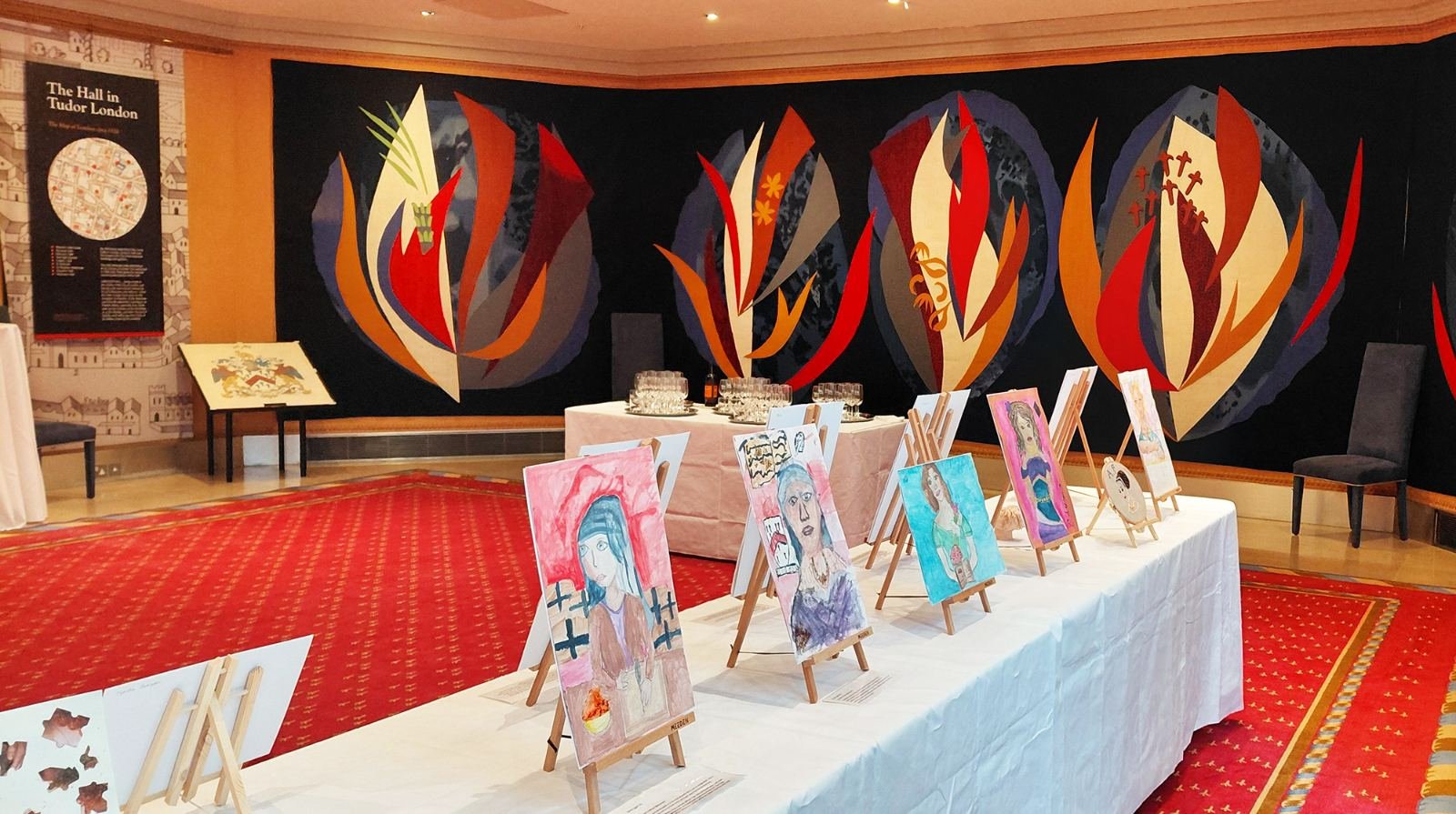
Each piece reflects a young person's encounter with Annabell's medieval world
In Their Own Words
"I enjoyed this project a lot because I got to try new art techniques like embroidery instead of doing normal 2D portraits."
— Wulf, Mossbourne Community Academy
"It's actually very interesting to see the history in the small parts that we don't really know about and see important people that weren't recognised. I really liked drawing Annabell because it was like trying to figure out a puzzle without all the puzzle pieces."
— Sahaaya, Mossbourne Community Academy
"It was really fun, and I felt like I could be really creative."
— Miray, Mossbourne Community Academy
"I liked that I took part in something important."
— Narlee, Mossbourne Community Academy
Quotes collected on exhibition day at Grocers' Hall, 10 March 2026
Reflections
"Watching the students walk into Grocers' Hall, proud of the artwork they had created through critical thinking and genuine engagement — that is what learning is about!"
— Yvette Reinfor
Founder & Director, More Curricular CIC
"It's been a privilege to have these children here; they've really brought Grocer History alive with their questions but most importantly with their artwork which is of an extraordinary high quality. It’s been an absolute pleasure having them here, hope they will come back."
— Dr Helen Clifford
Company Historian, The Worshipful Company of Grocers
"It is the second project we have done with More Curricular CIC. What was most fascinating was bringing a person from the past to life, and the children realising they could not Google so they had to use their imagination to piece together information. For the children it’s been really enlightening."
— Andrea Rowlandson
Art Teacher, St Mary's RC Primary School
"The Grocers’ Company is living history and embodies all that is good about the modern world. By learning about those that went before us, both good and not so good, we can live more enriched and better lives ourselves. What better role model than Annabell Furner? We cannot help but to be inspired by her and similar stories throughout our Country’s rich history."
— Brigadier Greville Bibby (retd) CBE
Clerk, The Worshipful Company of Grocers
The Exhibition Day
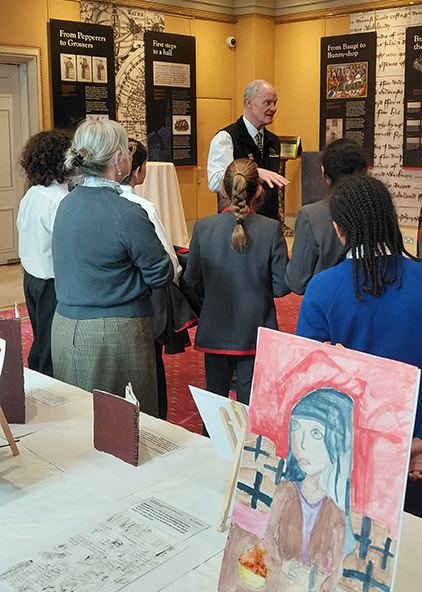
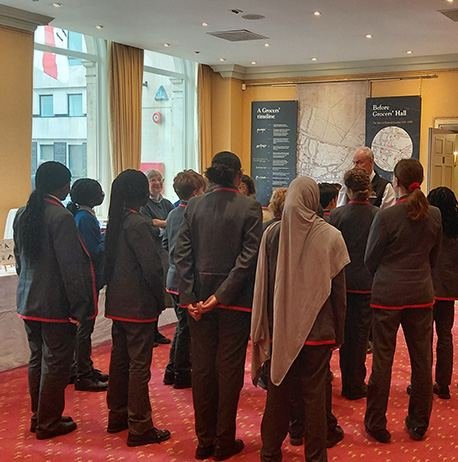
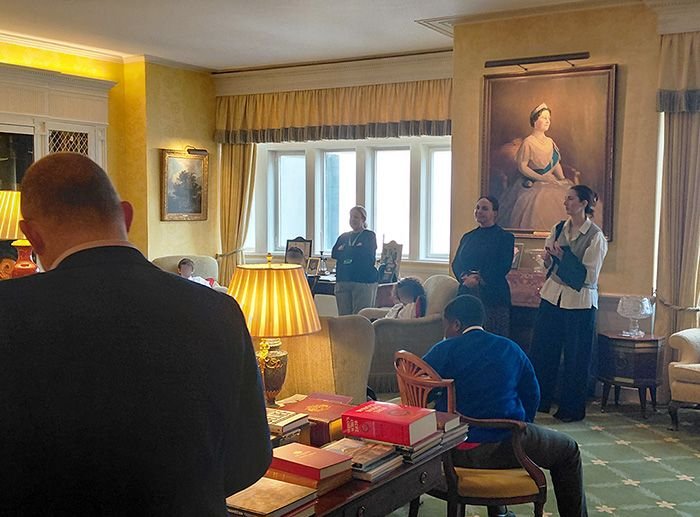
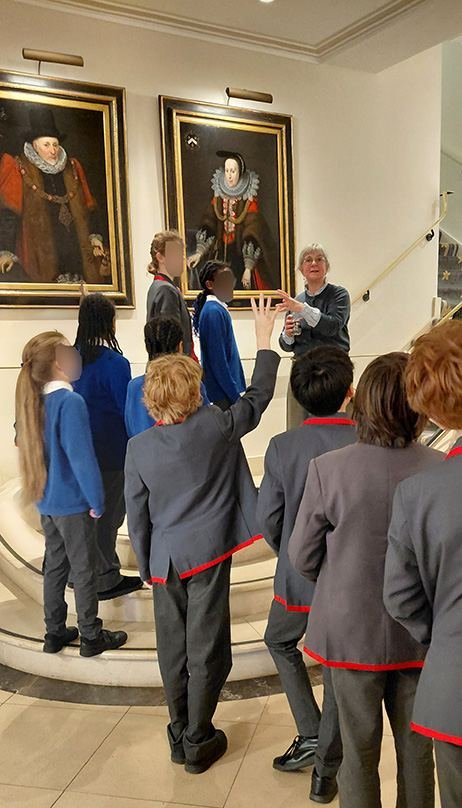
The students visited Grocers' Hall to see their artwork exhibited, received a tour of the Hall, and celebrated with refreshments.
A Circle Completed
Mossbourne Community Academy stands on the site of the Grocers' Company School, founded in 1876 in Hackney. The Worshipful Company of Grocers remains the principal sponsor of Mossbourne today, with Grocer governors on every Federation school board.
This exhibition brought Mossbourne students back into Grocers' Hall to explore the story of one of the Company's earliest female members — in the very Hall of the Company that founded the school on the site where those students now learn.
Yvette Reinfor
Founder & Director, More Curricular CIC
Bukunmi Jasanya
Programme Coordinator, More Curricular CIC
Mossbourne Community Academy, Hackney
St Mary's RC Primary School, Battersea
Charlotte Iles, Head of Art, Mossbourne Community Academy
Andrea Rowlandson, Art Teacher, St Mary's RC Primary School
The Worshipful Company of Grocers
Grocers' Hall, Princes Street
London EC2R 8AD
Dr Helen Clifford
Company Historian, The Worshipful Company of Grocers
Professor Francesco Guidi-Bruscoli
Professor of Economic History, University of Florence
The late Professor Jim Bolton
Professor of History, Queen Mary University of London
morecurricular.co.uk